BioFab™ Printer
Precision Biomimicry

The BioFab™ printer is designed to bridge the gap between synthetic intervention and natural biology. By bio mimicking the native tissue composition on a molecular scale, BioFab™ replicates the specific morphological structure and biological function of the target organ’s tissue.
Kick Start The Regeneration
Custom Microenvironments
Tailors the physical architecture to match the destination tissue.
Mechanical & Biochemical Synergy
Provides the structural integrity and signaling required for seamless integration.
Bio-Active Integration
Allows for the precise delivery of cells, stem cells and growth factors directly into the biomimetic matrix.
Skin Print
Restoring the Living Barrier
True skin regeneration aims to restore the body’s protective layer by recreating the original dermal-epidermal complexity.
Scaffold
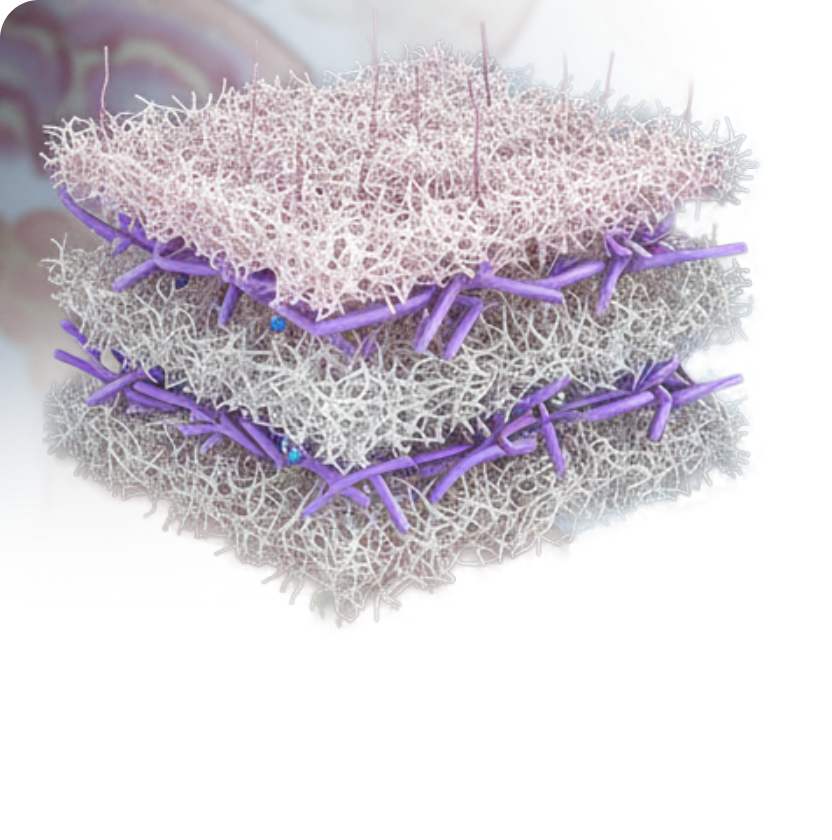
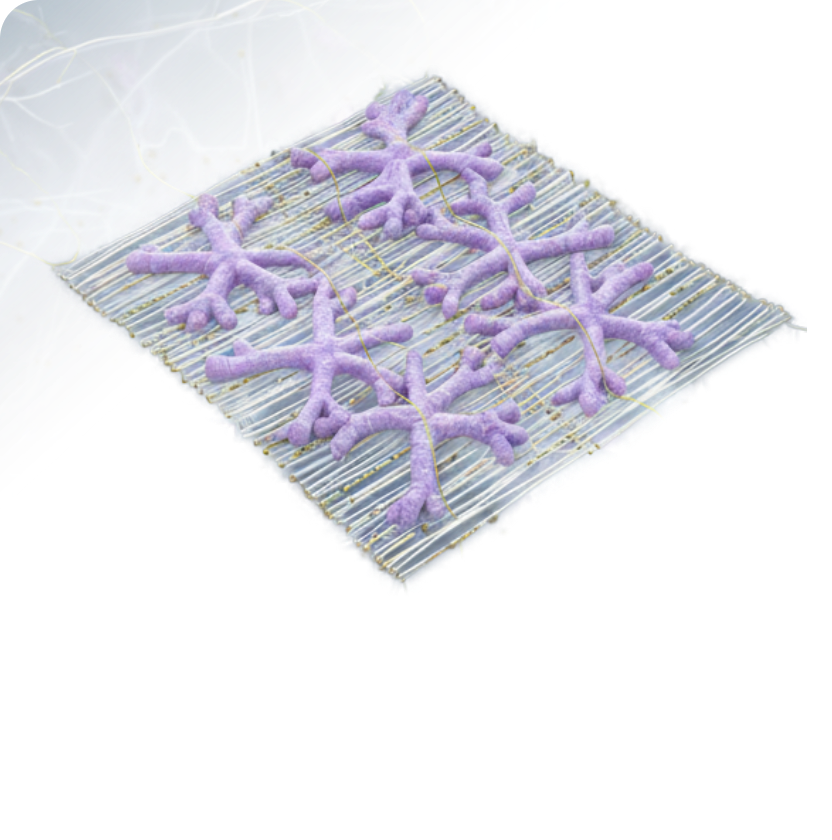
Engineered fibrous networks with high specific surface areas to absorb wound exudate, acting as a physical barrier and “living bandage” that replaces the epidermis and accelerates dermal remodeling.
Blood Vessels Print
Initiating Endothelial Recruitment
Vascular regeneration is a race to restore blood flow. We provide the biological “start signal” for new conduits.
Scaffold
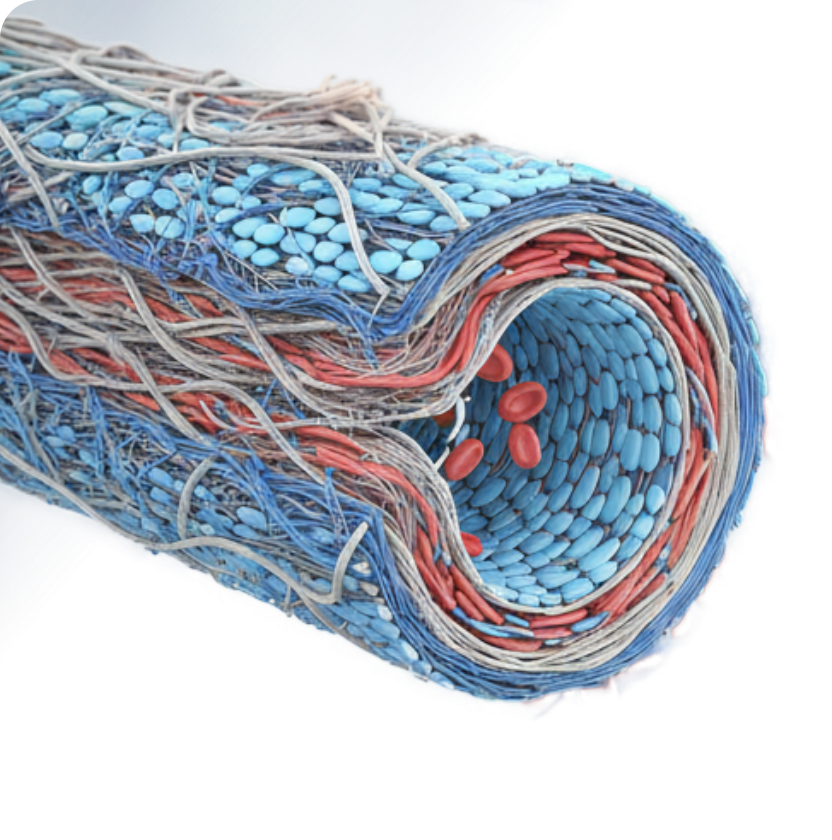
A multi-layered architecture utilizing aligned nanofibers that mimics the native three-layered structure of blood vessels, providing hemodynamic stability and guiding the growth of endothelial and smooth muscle cells.
Bone Print
Activating the Mineralization Cascade
Regenerating bone requires a signal to transition from a soft injury site to a rigid, mineralized matrix.
Scaffold
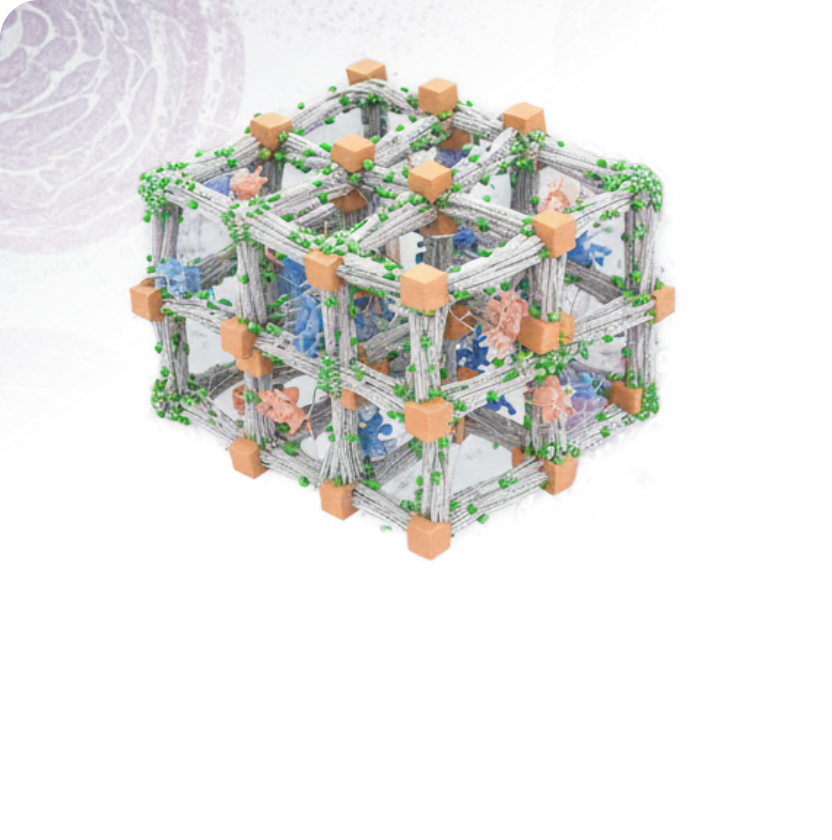
A hierarchical porous architecture mimicking natural bone, reinforced with hydroxyapatite (HAP) or bioactive glass to promote mineralization and provide the high mechanical integrity needed for load-bearing support.
Heart Print
Rescuing the Contractile Engine
In the heart, regeneration means restoring the ability to beat, preventing the fibrous “repair” that leads to failure.
Scaffold
Highly aligned, conductive fibers that replicate the native cardiac milieu, allowing cardiomyocytes to infiltrate the scaffold and conduct the electrical signals necessary for rhythmic contraction.