
Pipeline
Wound Care
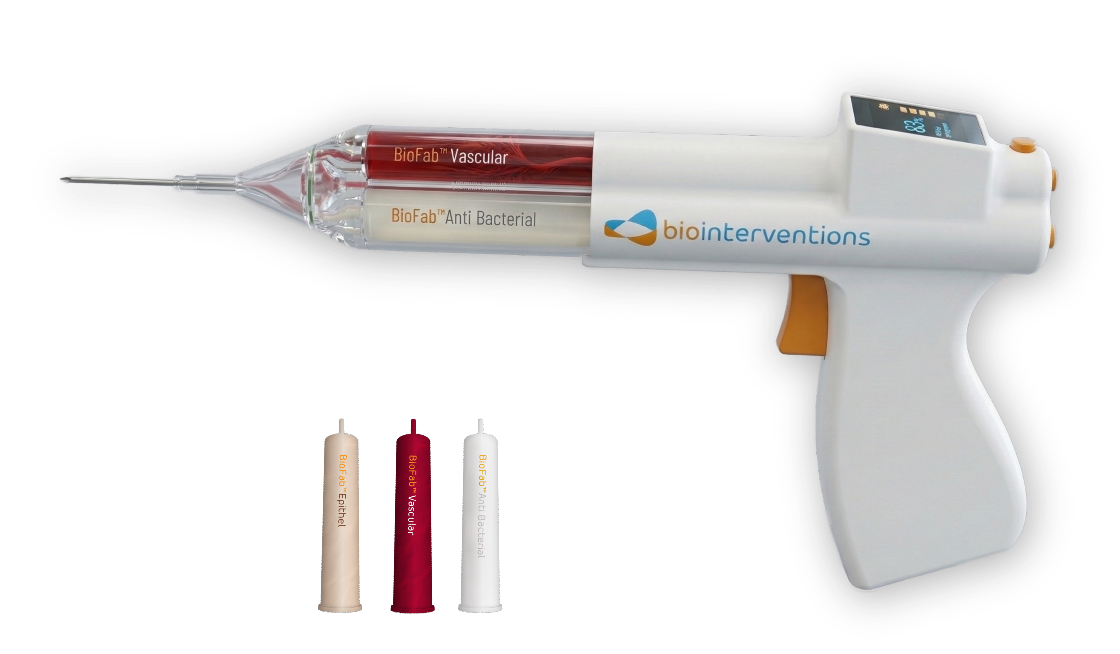
Chronic wounds—those failing to heal for six months or longer—represent a staggering unmet clinical need. With a five-year mortality rate for diabetic foot ulcers exceeding that of breast cancer and $15billions spent annually on products, the urgency for a disruptive solution is clear. We have engineered three specialized Bio-Inks to address the different stage of wound healing in which a wound can get stalled: Inflammation, Proliferation, and Remodeling.
INDICATION
PRE-CLINICAL
CLINICAL
FDA
POC
Safety
BioFab™ Antibacterial

Q4 2027
BioFab™ Vascular

Q4 2028
BioFab™ Epithel

Q4 2028
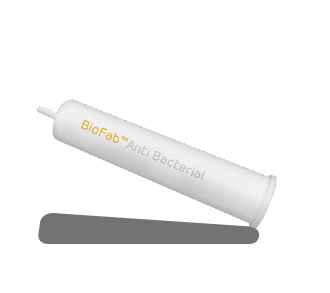
BioFab™ Antibacterial
Defeating Infection
This bio-ink is specifically formulated for wounds trapped in the early, high-risk cycles of contamination and infection.
The Problem Persistent bacteria and biofilm do more than stall growth; they create a toxic environment for native cells and the ECM. This leads to tissue necrosis, limb amputations, and potentially death if the infection becomes systemic.
The Scaffold A specialized, antimicrobial ECM-like matrix designed to provide structural support for native regeneration while serving as a vehicle for the controlled release of one of the most potent molecules known to fight bacteria and disrupt biofilm.
The Mechanism By neutralizing the threat of infection and providing a transient ECM-like matrix essential for native regeneration, we clear the path for the body to transition into the next stage of the regenerative cascade.
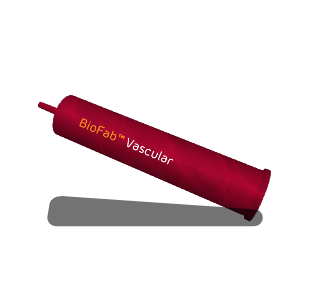
BioFab™ Vascular
Regenerating the Microvasculature
Tailored to regenerate blood vessels, this bio-ink addresses wounds stuck in the angiogenesis phase and lack a functional microvasculature system.
The Problem At the cellular level, regeneration is impossible without a direct and immediate blood supply; wounds lacking this micro-network cannot receive the oxygen and nutrients necessary for survival.
The Scaffold A tubular, elastic ECM-like structure engineered for hemodynamic stability and designed to mimic the native microvasculature.
The Biological Cargo the scaffold is loaded with potent cells and growth factors, including endothelial cells, platelets, VEGF (Vascular Endothelial Growth Factor), and PDGF (Platelet-Derived Growth Factor).
The Outcome The restoration of a functional microvasculature system that reconnects the tissue to the body's circulation.
BioFab™ Epithel
Achieving Final Closure
This bio-ink is specifically formulated to regenerate the epithelium—the uppermost layer of the skin—to reach final wound closure.
The Problem This product assists wounds that have a healthy microvasculature system and good blood flow but fail to proceed to final epithelial closure.
The Biological Cargo It provides the scaffold with the essential building blocks for this layer: fibroblasts and keratinocytes.
The Outcome Successful regeneration of the epithelium, resulting in complete wound closure and the restoration of the body's protective barrier.
The Future
Bio-Fab Esthetics
Utilizing electrospun (ES) fiber masks to deliver exosomes and growth factors post-needling, accelerating regeneration while the skin barrier is open.
Bio-Fab Esthetics
Utilizing electrospun (ES) fiber masks to deliver exosomes and growth factors post-needling, accelerating regeneration while the skin barrier is open.
Bio-Fab Esthetics
Utilizing electrospun (ES) fiber masks to deliver exosomes and growth factors post-needling, accelerating regeneration while the skin barrier is open.